Views: 0 Author: Site Editor Publish Time: 2025-07-11 Origin: Site


Let’s be real—optical encoders are amazing, but they’re not perfect. They’re total clean freaks: a speck of dust on their disk, and suddenly they can’t “see” straight. Moisture? Even worse—it fogs up their view, muddling signals.
They’re also a bit delicate. A hard knock or bi vibration can jostle their tiny parts, throwing off that precise light dance they do. And let’s not forget cost—they’re pricier than magnetic encoders, thanks to all that finicky optical gear.
Environmental Sensitivity: Susceptible to dust, dirt, moisture, and oil, which can block light paths and degrade performance.
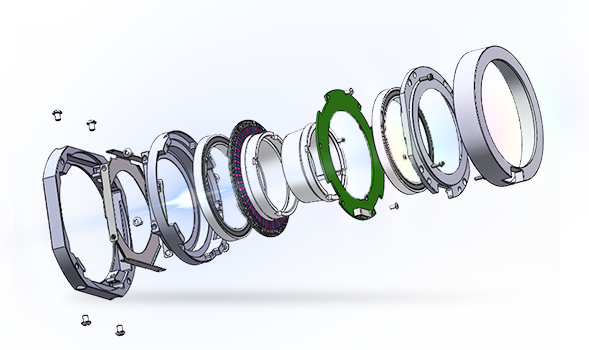
Fragility: The optical disk and components (e.g., LEDs, photodetectors) are delicate and can be damaged by vibration, shock, or temperature extremes.
Cost: More expensive than magnetic encoders, especially at high resolutions.
Complexity: Require precise alignment of the light source, disk, and detector for reliable operation.
Limited Operating Conditions: Perform poorly in extreme temperatures or environments with heavy electrical noise (without proper shielding).
But here’s the thing: at SHHXGD, we’re always tweaking. We seal better, reinforce smarter, making our optical encoders tougher. Because even perfectionists can learn to roll with the punches—without losing an ounce of that signature precision we’re known for.