Views: 13467 Author: Site Editor Publish Time: 2026-07-06 Origin: Site


In the field of medical robotics, encoders are often misunderstood as devices that "only provide feedback, not control." Technically, this statement is correct. But logically, it overlooks the most fundamental premise of any closed‑loop control system: without accurate feedback, there is no effective control. Hand tremor suppression – one of the most critical functions in surgical robotics – relies entirely on the real‑time position and velocity data provided by encoders.
From Feedback to Control: The Logic of Closed‑Loop Systems
To understand the role of encoders in tremor suppression, we first need to understand what a closed‑loop control system is.
In a surgical robot, the surgeon's hand movements are captured by a master console and converted into motion commands for the slave manipulator (the robotic arm). During this process, encoders are embedded in every joint of the robot. They continuously detect the joint's position, velocity, and angle, converting these physical quantities into electrical signals that are sent to the controller.
The controller receives the encoder's feedback data, compares it with the desired motion commands, calculates the deviation, and issues correction instructions. The encoder tells the system "what actually happened" ; the controller then decides "what to do next." Without the former, the latter is essentially guessing.
In surgical robotics, it is well established that encoders are the core component for achieving closed‑loop position control. Without them, even the most sophisticated control algorithms would have no reference point for correction.
Hand Tremor Suppression: Three Critical Roles of Encoder Data
Tremor suppression is not simply about "filtering out jitter." In medical robotics, encoder data plays an indispensable role in the following three areas:
1. The "Eye" That Captures Tremor
Physiological hand tremor is a high‑frequency, low‑amplitude involuntary movement. If not detected and compensated for in time, it accumulates along the manipulator chain and severely compromises surgical accuracy. The encoder is the first line of defense in capturing these tiny deviations.
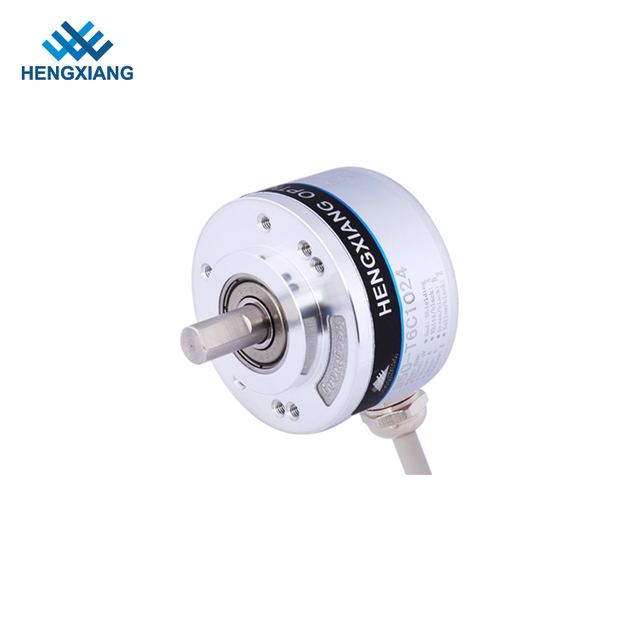
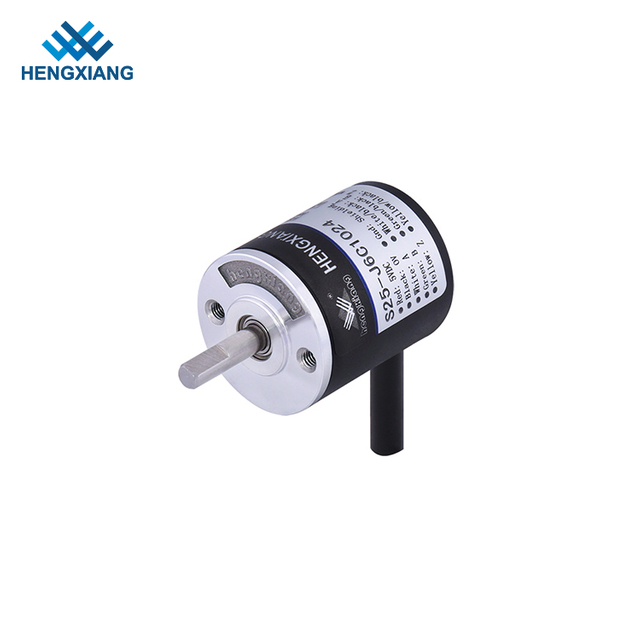
A high‑resolution encoder (such as the ZM35 series with 24‑bit resolution and ±80″ accuracy) can detect angular displacements of just a few arc‑seconds. This level of sensitivity is what makes it possible to identify tremor at its earliest stage and feed that information into the control loop.
2. The "Data Source" for Tremor Identification and Filtering
Once the encoder feeds the real‑time position and velocity data into the control system, the controller uses advanced filtering algorithms to separate the intentional motion (the surgeon's desired movement) from the unintended tremor. Fast‑response encoders enable the system to capture high‑frequency tremor components, providing the controller with clean, reliable data to work with.
3. The Foundation for Real‑Time Compensation
Based on the encoder's feedback, the controller sends reverse compensation commands to the actuators, canceling out the tremor at the end‑effector. This entire cycle – sense, compare, correct – happens hundreds or even thousands of times per second. The speed and accuracy of the encoder directly determine how precisely and quickly the system can respond.
Why "Feedback Only" Does Not Mean "Less Important"
Some may argue: "The encoder only provides feedback; it doesn't directly execute the compensation." That is true. But in any closed‑loop control system, feedback is not a passive data stream – it is the foundation upon which all control decisions are built.
Without the encoder's precise feedback, the controller would have no way of knowing:
Whether the joint has actually reached the commanded position,
How much deviation needs to be corrected,
Whether the compensation has been effective.
A control system without feedback is an open‑loop system – and an open‑loop system cannot suppress tremor, because it has no information to correct itself.
A Common Saying in Robotics
There is a well‑known saying in the robotics industry:
"The motor determines whether a robot can move; the encoder determines whether it can move precisely."
Encoders are often described as the "eyes" and the "sensory nerves" of robots. In surgical robotics – where precision, reliability, and safety are paramount – encoders are not optional accessories. They are fundamental components that directly influence positioning accuracy, motion smoothness, and overall system safety.
Conclusion
To say that "an encoder only provides feedback" is technically correct, but it misses the bigger picture.
In closed‑loop control, feedback and control are two sides of the same coin. One cannot exist without the other. For hand tremor suppression in medical robotics, the encoder is the first and most critical step in the entire control chain – it senses the tremor before the controller can compensate for it.
Perception comes before action.
And without perception, there is no accurate action.
Shanghai Hengxiang Optics – Since 2001
High‑precision encoders for medical robotics, industrial automation, and beyond.
OEM/ODM supported. CE & ISO9001 certified.
Contact us for more information.