Views: 5321 Author: Site Editor Publish Time: 2026-07-10 Origin: Site


The first and most important decision is whether you need an incremental or an absolute encoder.
Incremental encoders generate pulses as the shaft rotates. They measure relative position by counting pulses from a reference point. Think of them like a tape measure – they tell you how far you‘ve moved from where you started, but they don’t know where “zero” is until you tell them. When power is lost, incremental encoders forget their position and must be re-homed upon restart. They are cost-effective, widely compatible, and excellent for speed feedback, conveyor control, and general automation.
Absolute encoders, by contrast, assign a unique digital code to every shaft position. Like a GPS coordinate, this code tells the system exactly where the shaft is at all times – even after a power outage. No homing is required on startup. Absolute encoders are the preferred choice for robotics, CNC machines, medical equipment, and safety-critical applications where precision and reliability are paramount.
Feature | Incremental Encoder | Absolute Encoder |
|---|---|---|
Position feedback | Relative (pulse count) | Absolute (unique code) |
After power loss | Position lost, needs homing | Position retained, immediate read |
Output | Pulses (A, B, Z) | Digital code (serial/BiSS/SSI) |
Cost | Lower | Higher |
Best for | Speed feedback, conveyors, general automation | Robotics, CNC, medical, safety-critical |
1. Resolution vs. Accuracy – Don‘t Confuse Them
Many buyers make the mistake of equating high resolution with high accuracy. They are not the same. Resolution is the smallest position increment an encoder can detect (e.g., “13-bit” means 8,192 positions per revolution). Accuracy is how close the reported position is to the actual physical position – affected by mechanical factors like disc eccentricity and temperature drift. A high-resolution encoder mounted on a system with poor mechanical precision will still deliver poor accuracy. Always evaluate both parameters together.
2. Environmental Protection (IP Rating)
Where will your encoder be installed? In a clean, indoor environment, a basic IP40 rating may suffice. But for applications exposed to dust, moisture, or washdown – such as food processing, outdoor equipment, or medical environments – a sealed design with IP65 or higher is essential for long-term reliability.
3. Voltage and Output Compatibility
Match the encoder‘s voltage to your system‘s logic levels. The industry standard remains 5.0 V, but 3.3 V is increasingly common for low-power, portable devices. Also consider output types – TTL/RS-422 differential, HTL push-pull, or open collector – to ensure compatibility with your controller.
4. Shaft Type and Mounting
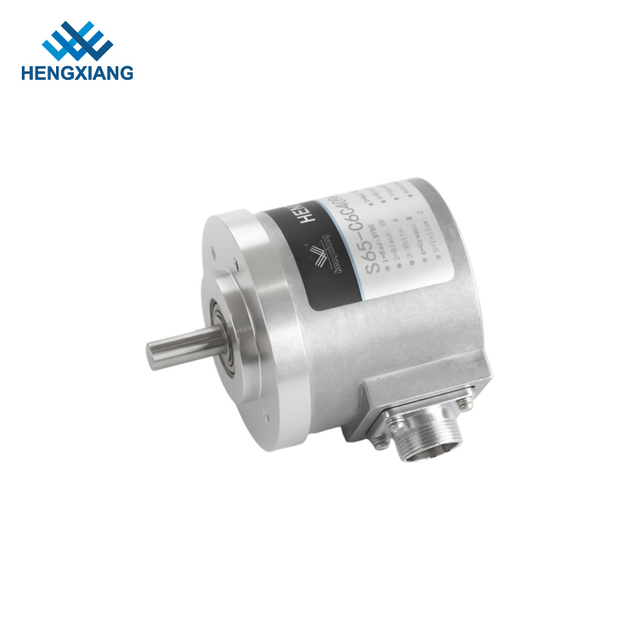
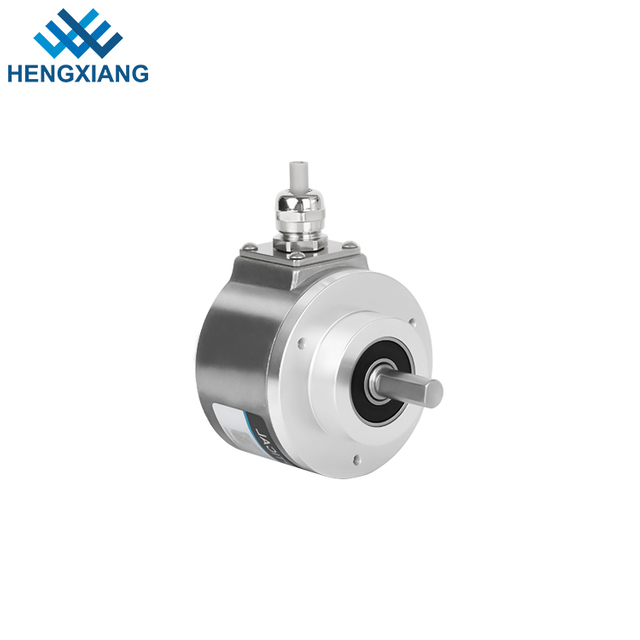
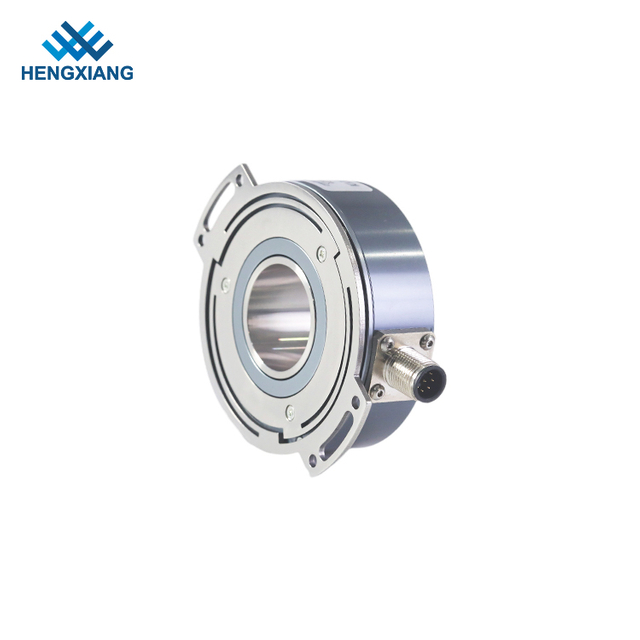
Encoders come with solid shafts or hollow shafts (blind or through-hole). Solid shafts are typically mounted via flanges, while hollow shafts slide directly onto motor shafts – saving space and simplifying installation. The choice depends on your mechanical design and available space.
5. Operating Temperature and Speed
Industrial environments can be harsh. Ensure your encoder‘s temperature range matches your application – standard industrial grades typically cover -20°C to +85°C, while extended ranges go to -40°C or higher. Similarly, verify that the maximum speed rating (rpm) exceeds your motor‘s operating speed.
Application | Recommended Encoder Type | Key Considerations |
|---|---|---|
Robotics / Collaborative Robots | Absolute, compact (≤40mm OD), lightweight | High precision, space-constrained, no homing required |
CNC Machine Tools | Absolute or high-resolution incremental | Precision positioning, vibration resistance |
Servo Motors | Incremental or absolute (depending on drive) | High speed, high resolution, UVW commutation signals |
Conveyors / Packaging | Incremental, cost-effective | Speed feedback, general automation |
Medical Equipment | Absolute, sealed (IP65+), high reliability | Safety-critical, immediate position on startup |
Elevators | Absolute or incremental with Z index | Position feedback, smooth operation |
Wind Turbines / Renewable Energy | Absolute, rugged, wide temperature range | Harsh environment, remote maintenance |
Since 2001, Shanghai Hengxiang Optical Electronics Co., Ltd. has been designing and manufacturing high-precision optical encoders for industrial automation, robotics, CNC machinery, medical equipment, and beyond. With 25 years of experience, we offer:
10+ series, 100+ models – covering incremental, absolute, hollow shaft, solid shaft, and magnetic encoders
Custom OEM/ODM solutions – tailored to your specific application requirements
ISO9001 & CE certified – quality you can trust
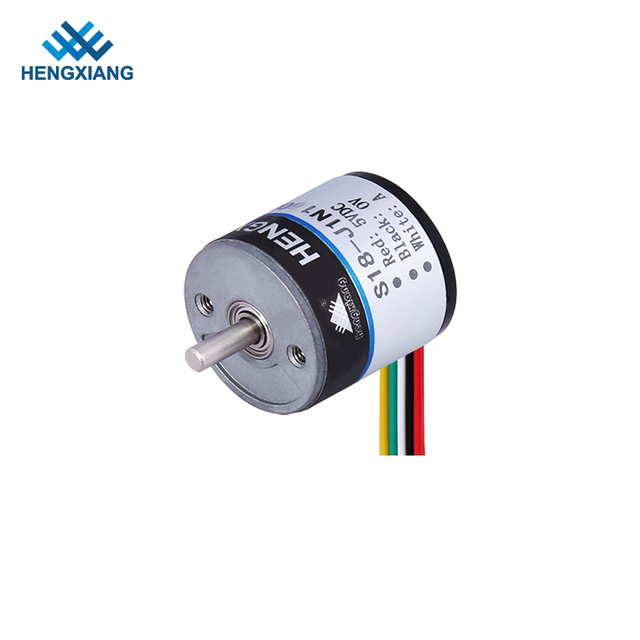
Compact designs – from ultra-miniature 18mm diameter encoders to rugged 100mm models
Global shipping – serving customers worldwide
Whether you need a high-resolution incremental encoder for a servo motor or a compact absolute encoder for a surgical robot, we have the expertise and product range to deliver.
Choosing the right encoder isn‘t just about picking the cheapest option or the one with the highest resolution. It’s about understanding your application‘s true requirements – speed, precision, environment, budget, and system compatibility.
Take the time to evaluate your needs, and don‘t hesitate to consult with experts. The right encoder will save you from costly downtime, maintenance headaches, and performance issues down the road.
Need help selecting the right encoder for your project? Contact us today – we’re here to help.
Shanghai Hengxiang Optical Electronics Co., Ltd.
www.shhxgd.com
[E-mail: fang@shhxgd.com]
[Tel: +86-189-3007-7369/+86-021-5461-3487]
25 years of precision. One focus: encoders.