Views: 0 Author: Site Editor Publish Time: 2025-11-19 Origin: Site


In the world of motion control and automation, the choice of sensor technology can significantly impact the performance, accuracy, and efficiency of your system. Among the various sensor options, absolute encoders stand out due to their unique ability to provide precise position feedback without the need for a reference point. Whether you are designing a robotics system, an industrial automation application, or a high-precision tool, understanding when and why to choose an absolute encoder is crucial.
In this article, we'll explore the role of absolute encoders in design, compare them with incremental encoders, and delve into their advantages, applications, and limitations. By the end, you'll have a clear understanding of when an absolute encoder is the right choice for your specific project.
An absolute encoder provides precise position feedback and is essential in applications requiring reliable position tracking, particularly where power loss or system resets might occur. It is most beneficial in applications where the system needs to maintain its position without requiring a reset or recalibration after a loss of power. While incremental encoders offer simplicity and lower cost, absolute encoders excel in critical situations, ensuring accuracy and preventing potential system errors.
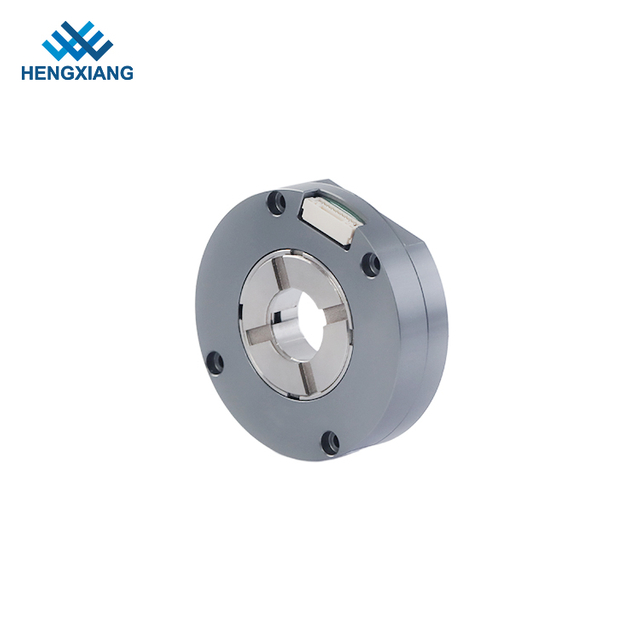
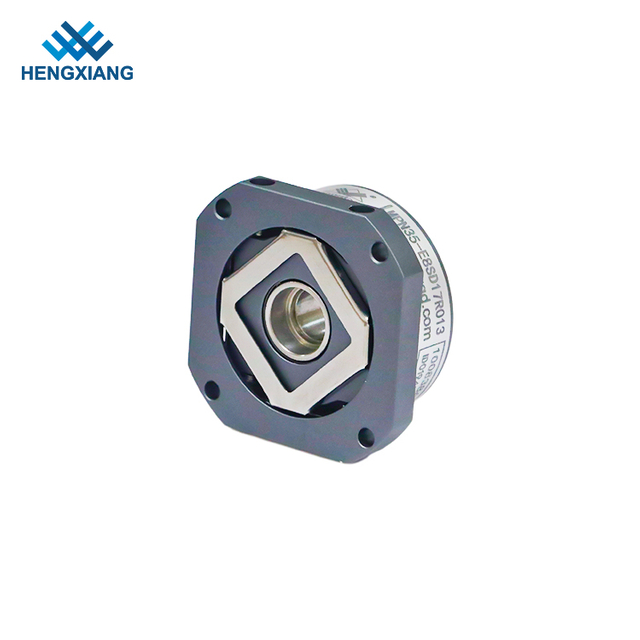
An absolute encoder is a type of position sensor that provides a unique, non-ambiguous digital output corresponding to the angular position of a rotating object. Unlike incremental encoders, which only provide relative position information, absolute encoders give the exact position in a coordinate system, even after a power-down or reset. This is accomplished by encoding the position of a shaft with a unique binary or gray code, which can be read by the controller at any given time.
Each output code from the encoder corresponds to a specific angle, and because each position is encoded uniquely, there's no need for the system to reference its position at startup or after power loss. This makes absolute encoders ideal for systems where precise, continuous position feedback is essential.
Single-Turn Encoders: These encoders measure a single revolution (360 degrees). They are typically used in applications where the system doesn't require more than one full rotation to determine position.
Multi-Turn Encoders: These encoders track multiple revolutions and provide the exact position after multiple rotations. These are beneficial in high-precision applications where the shaft can rotate many times and where absolute position tracking is critical over many turns.
Both absolute encoders and incremental encoders are widely used in motion control applications, but they differ significantly in their operation and applications.
An incremental encoder counts the number of pulses generated as the shaft rotates, but it doesn't provide information about the absolute position of the shaft. This means that if the system loses power or is reset, the position must be recalibrated using a reference point or home position. Incremental encoders are often simpler and less expensive than absolute encoders, and they are useful in applications where relative position changes are sufficient.
In contrast, an absolute encoder provides a unique position value at all times, regardless of power loss or system resets. This makes them more suitable for critical applications where the system must know its exact position without needing to recalibrate or reference itself after a power-down.
| Feature | Absolute Encoder | Incremental Encoder |
|---|---|---|
| Position Feedback | Unique position for each angle, no need for recalibration after power loss | Provides relative position, recalibration needed after power loss |
| Output Format | Digital, with a unique code for each position | Pulses that count the movement from a starting point |
| Complexity | More complex due to the need for unique position encoding | Simpler and cheaper, requires a counter to track position |
| Cost | Typically more expensive | Less expensive |
| Applications | Critical, high-precision applications | General applications where relative position is sufficient |
Incremental Encoders are ideal for systems that don't require an absolute position feedback and where the application can handle a recalibration or reference process after power loss or system reset. These are often used in less critical applications where cost is a concern and precision can be sacrificed for simplicity.
Absolute Encoders are preferred for applications requiring precise position feedback at all times. They are the best choice when power failure or reset might disrupt system functionality, such as in robotics, industrial machinery, or automation systems where continuous, reliable position tracking is paramount.
Choosing an absolute encoder over an incremental encoder can be driven by several factors, including precision, reliability, and cost considerations. Below are some key reasons to select an absolute encoder:
One of the most significant advantages of an absolute encoder is its ability to retain the exact position of the system even after a power loss. In an application where uptime and accuracy are critical, this feature ensures that the system does not need to be recalibrated or referenced upon startup, reducing downtime and potential errors.
An absolute encoder can offer more precise position measurement because it directly encodes the absolute position of a shaft. This makes it ideal for applications where the exact position must be tracked with high accuracy, such as in CNC machines, robotics, and automated systems.
In systems with incremental encoders, it is essential to reference the "home" or "zero" position whenever the system is powered up or reset. Absolute encoders, however, do not require such a reference, as they always know the exact position of the shaft, simplifying the design and operation of the system.
For critical applications such as medical equipment, aerospace, or industrial automation, where accuracy and uptime are paramount, absolute encoders provide more reliable feedback. These applications benefit from the encoder's ability to provide a consistent and precise position even in challenging environments, such as those with frequent power interruptions or high electromagnetic interference.
In certain applications, such as robotic arms or high-precision machinery, the system may require multiple rotations of the shaft. Multi-turn absolute encoders track the position over multiple revolutions, which is essential for systems with a full range of motion requiring continuous, accurate tracking.
With absolute encoders, the need for additional sensors, systems, or homing procedures is significantly reduced, streamlining the design process and improving system robustness. This is particularly beneficial in complex applications where the reduction of mechanical parts or external calibrations can lower the risk of failure.
Due to their unique capabilities, absolute encoders find applications in a variety of fields, particularly where precision, reliability, and uptime are crucial. Here are some common use cases:
In industrial automation, absolute encoders are used for position feedback in various machines such as conveyor belts, robotic arms, and CNC machines. They provide precise feedback on position, ensuring accurate operation and reducing the risk of errors due to power loss.
Robotic systems rely heavily on absolute encoders for accurate position feedback in real-time. Whether used in industrial robots, drones, or autonomous vehicles, absolute encoders help ensure that the robot knows its exact position without the need for recalibration after every reset.
In aerospace systems, absolute encoders are used in critical applications like landing gear systems, flight control surfaces, and actuators, where position feedback must be precise and reliable.
Medical equipment, including surgical robots and imaging systems, often relies on absolute encoders for accurate motion control. The high precision and reliability offered by these encoders are crucial in ensuring the safety and efficacy of medical procedures.
Elevators and lift systems use absolute encoders to track the precise position of the elevator car. This helps in controlling the car's movement, ensuring smooth operation, and preventing errors such as overshooting or positioning errors.
In the automotive industry, absolute encoders are used in systems like electric power steering, automated driver assistance, and motor control systems. They provide real-time position feedback, ensuring accurate and responsive control of various automotive subsystems.
In designing systems that require precise, reliable, and continuous position feedback, selecting the right type of encoder is critical. Absolute encoders offer significant advantages in terms of accuracy, power loss resilience, and reduced complexity in recalibration compared to incremental encoders. While incremental encoders might be sufficient for many applications, absolute encoders are the preferred choice in high-precision, critical systems where position integrity must be maintained at all times.
When considering whether an absolute encoder is right for your design, assess factors like power loss conditions, required precision, system complexity, and application type. The extra investment in an absolute encoder can be justified by the reliability, accuracy, and operational efficiency it provides in demanding environments.
The primary advantage of an absolute encoder is its ability to maintain position accuracy even after power loss or system resets, making it ideal for high-precision applications where continuous, reliable position feedback is required.
No, absolute encoders are typically more expensive and complex than incremental encoders, so they are best suited for high-precision, critical applications. For simpler systems where position accuracy after power loss is not crucial, incremental encoders may be a more cost-effective choice.
A single-turn absolute encoder provides position feedback for one complete revolution (360 degrees), while a multi-turn absolute encoder can track positions over multiple rotations, which is useful for applications requiring continuous feedback over several turns.
Absolute encoders work by encoding the position of the rotating shaft using a unique code, such as a binary or gray code. Each position has a corresponding unique output, allowing the system to know its exact position without needing recalibration after a power loss.
Yes, absolute encoders are generally more expensive than incremental encoders due to their complexity and additional functionality, such as multi-turn capability and resistance to power loss. However, the added cost is often justified by their superior performance in critical applications.