Views: 35243 Author: Shanghai Hengxiang Optical Electronics Co,ltd Publish Time: 2026-06-01 Origin: Shanghai Hengxiang Optical Electronics Co,ltd


In the world of industrial automation, precision is everything. Whether it is a robotic arm assembling a smartphone, a CNC machine cutting a turbine blade, or an elevator stopping exactly level with the floor, none of these actions would be possible without a small but critical device: the encoder.
What is an Encoder?
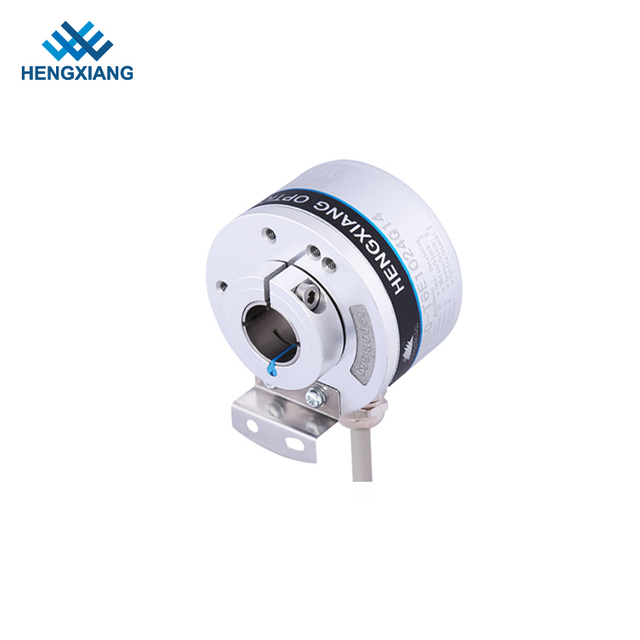
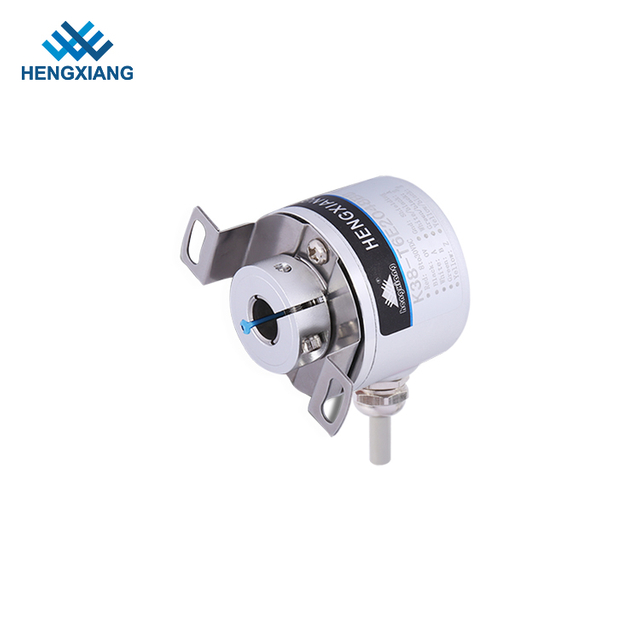
An encoder is a sensor that converts mechanical motion – specifically rotation angle, speed, and direction – into electrical signals. These signals are then read by a controller (such as a PLC, servo drive, or robot controller) to close the loop between command and actual movement. Simply put, an encoder tells the machine where a shaft is, how fast it is turning, and which way it is going.
How Does It Work?
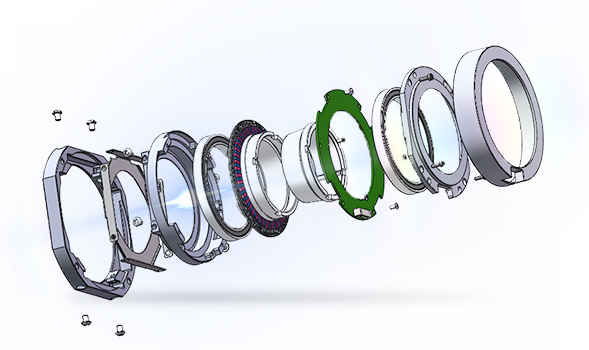
The most common type is the optical rotary encoder. It consists of a disc with fine slits (a code wheel), a light source (LED), and a photodetector. As the shaft rotates, the disc spins, and the light passes through the slits to generate a series of pulses. The number of pulses corresponds to the angular displacement, while the frequency of the pulses indicates speed.
Types of Encoders
Encoders are generally divided into two main categories based on their output:
Incremental Encoders generate pulses as the shaft rotates. They are simple, cost‑effective, and offer high resolution. However, they do not remember position after power loss – the system must return to a reference point (home) on startup. They are ideal for speed monitoring and relative positioning.
Absolute Encoders output a unique digital code for each shaft position, often using multiple tracks or serial communication (SSI, BiSS, CANopen, EtherCAT). Even after a power cycle, the encoder immediately reports its exact position without any movement. This makes them essential for safety‑critical applications such as robot joints, wind turbine pitch control, and medical equipment.
Based on sensing technology, encoders can be:
Optical – high resolution and accuracy, but sensitive to dust and moisture.
Magnetic – rugged, resistant to dirt and vibration, but slightly lower precision.
Inductive/Capacitive – newer technologies offering a balance between robustness and accuracy.
Key Applications
Encoders are everywhere in modern industry:
CNC machines – spindle speed and tool position feedback for micron‑level accuracy.
Industrial robots – joint angle measurement for precise path planning and collision detection.
Elevators – motor speed and position control to achieve leveling errors within ±1 mm.
Drones and gimbals – miniature encoders stabilize cameras and control flight surfaces.
Wind turbines – absolute encoders monitor pitch and yaw angles, even after power loss.
Medical devices – surgical robots and CT scanners rely on high‑precision absolute encoders.
Selecting the Right Encoder
When choosing an encoder, consider:
Incremental or absolute? Use incremental for speed feedback; use absolute where power‑off position memory is required.
Resolution – higher PPR or more bits for finer control, but avoid over‑specifying which increases cost.
Environmental rating – IP65/IP67 for dusty or wet locations; optical types prefer clean environments.
Interface – match the encoder's output (push‑pull, line driver, SSI, fieldbus) to your controller.
Mechanical fit – shaft size, mounting flange, and overall dimensions must fit the machine.
Conclusion
Encoders may be small, but they are the “eyes” that enable machines to see their own motion. As Industry 4.0 advances, encoders are becoming smarter – integrating diagnostic functions, real‑time communication, and even edge computing. Whether you are designing a new robot or upgrading a legacy machine, choosing the right encoder directly impacts performance, reliability, and safety.