Views: 0 Author: Site Editor Publish Time: 2024-08-10 Origin: Site


A high-precision optical encoder is a device used to measure angular or linear position with high accuracy. It converts the position of a shaft or linear displacement into an electronic signal that can be read by a control system. Key points about high-precision optical encoders include:
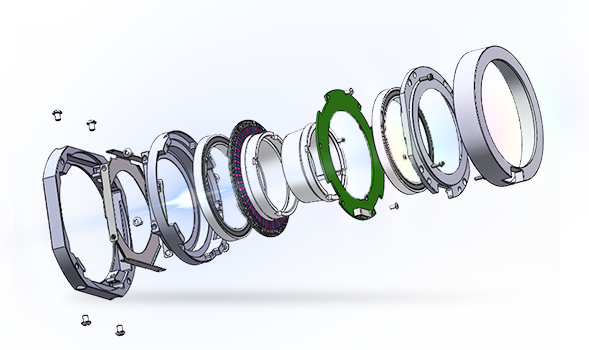
1.Function: They provide precise position feedback by using a light source, a code disk, and a photo-detector. The code disk has patterns that interrupt the light beam as it rotates or moves linearly.
2.Components: The main components include a light source (typically an LED), a rotating or linear code disk, and an array of photodetectors.
3.Resolution: High-precision optical encoders offer very high resolution, often measured in thousands of pulses per revolution (PPR) for rotary encoders or microns for linear encoders.
4.Accuracy: They provide highly accurate position measurements, essential for applications requiring precise control, such as robotics, CNC machinery, and medical devices.
5.Advantages: These encoders are known for their high accuracy, reliability, and durability. They can operate in harsh environments and provide consistent performance over time.
6.Applications: Commonly used in industries such as automation, aerospace, medical equipment, and precision manufacturing.
In summary, high-precision optical encoders are vital components in systems that require accurate position feedback and control, offering high resolution and reliability.