Views: 236 Author: Site Editor Publish Time: 2024-06-11 Origin: Site


Precision optical encoders are high-accuracy devices used to measure position, velocity, and direction of mechanical components. They operate by converting the motion of an object into an electrical signal, which can then be read by a digital system.
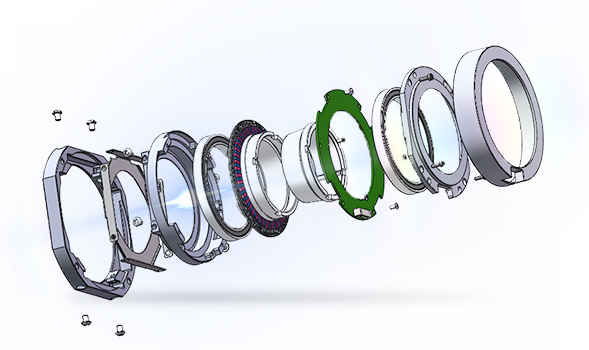
These encoders consist of a light source, a photodetector, and a code disk or strip marked with precise patterns. As the object moves, the code disk or strip interrupts the light beam, creating a series of light and dark signals that the photodetector converts into electronic pulses. These pulses are then processed to determine the exact position and movement of the object.
There are two main types of optical encoders: incremental and absolute. Incremental encoders generate a series of pulses to measure relative motion, requiring a reference point to determine an exact position. Absolute encoders, on the other hand, provide a unique code for each position, allowing precise location tracking without needing a reference point.
Precision optical encoders are widely used in applications requiring high accuracy and reliability, such as CNC machines, robotics, medical devices, and aerospace engineering. Their ability to provide precise feedback makes them essential for maintaining the accuracy and performance of complex systems.