Views: 0 Author: Site Editor Publish Time: 2024-08-13 Origin: Site


An optical encoder is a device that converts the position or motion of a shaft or axle to an analog or digital signal. Here’s a concise overview of its working principles:
Components:
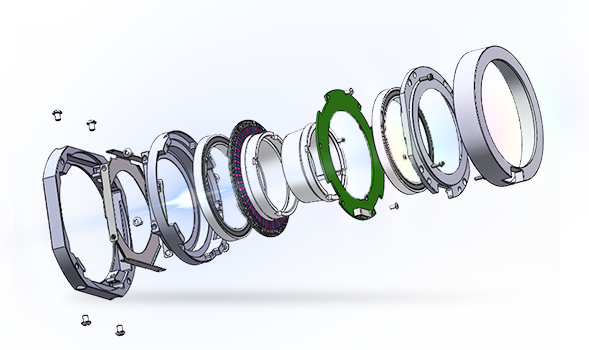
Code Disk: A disk with transparent and opaque segments.
Light Source: Often an LED, it emits light through the code disk.
Photo Detector: Detects light passing through the disk.
Signal Processor: Converts light signals into electrical signals.
Functionality:
Light Interruption: As the code disk rotates, the transparent and opaque segments intermittently allow light to pass through to the photo detector.
Signal Generation: The photo detector generates pulses of light that correspond to the segments of the disk.
Signal Processing: These pulses are processed to create a digital or analog signal representing the position or motion of the shaft.
Types:
Incremental Encoder: Measures relative position by counting pulses from a known reference point.
Absolute Encoder: Provides a unique code for each shaft position, allowing for absolute position measurement.
Applications:
Used in various industries for precise motion control, such as robotics, manufacturing, and instrumentation.
By understanding these key points, one can grasp the basic working mechanism of optical encoders.