Views: 245 Author: Site Editor Publish Time: 2024-07-08 Origin: Site


Optical encoders operate based on the principle of light interruption to generate signals that represent motion or position. The core components of an optical encoder include a light source (usually an LED), a photodetector, a code disk, and signal processing circuitry. Here's a concise overview of their working principle:
1. Light Source: The LED emits a beam of light towards the photodetector.
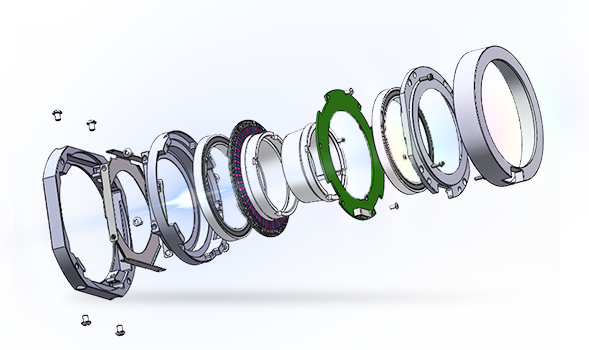
2. Code Disk: Positioned between the light source and the photodetector, the code disk is a circular plate with transparent and opaque sections (patterns) that rotate with the motion of the encoder's shaft.
3. Photodetector: As the code disk rotates, the alternating patterns intermittently block and allow light to pass through to the photodetector. This creates a series of light pulses.
4. Signal Processing: The photodetector converts these light pulses into electrical signals. These signals are then processed to generate digital outputs that correspond to the position or motion of the encoder's shaft.
For incremental encoders, the disk features evenly spaced lines, and the system counts pulses to determine movement. Absolute encoders, on the other hand, use unique patterns for each position, allowing them to determine the exact position without needing to reference a starting point.
Optical encoders are highly valued for their precision and reliability in converting mechanical motion into digital signals, making them indispensable in various applications requiring accurate position or speed monitoring.